
In October 2015, the sectors had witnessed a growth of 3.2 per cent.

'Instead of the government and telecom operators solving the mess of their own creation, they're telling us we need to give access to our phones perpetually.'

The output of eight key infrastructure sectors expanded by 3.1 per cent in October 2024, sharply down from a 12.7 per cent growth registered in the same month last year, according to official data released on Friday.
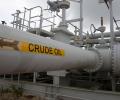
The growth in production of eight key infrastructure sectors slowed down to 6.1 per cent in July this year due to a decline in the output of crude oil and natural gas, according to official data released on Friday. The growth rate, however, is up from 5.1 per cent in June.

'When global politics has some intervention on the core software one uses, and if you are cut off from your own data in critical workflows, sovereignty is no longer optional. It becomes a necessity.'

'The South today is a creative engine shaping the future of Indian entertainment.'

The eight core sector industries have a weight of 37.9 per cent in the overall Index of Industrial Production.

Slow growth in key sectors would also have implications on the Index of Industrial Production (IIP) number as these segments account for about 41 per cent to the total factory output.

Growth in output of coal, cement and electricity slowed to 0.3%.

The output of eight key infrastructure sectors expanded by 2 per cent in September, though the growth was slower than the 9.5 per cent registered in the same month last year, according to official data released on Wednesday. The output of these sectors had contracted by 1.6 per cent in August. Out of the eight key sectors, three -- crude oil, natural gas and electricity -- recorded negative growth in September.

The growth rate in September too was 3.2%.
The growth in production of eight key infrastructure sectors slowed down to a 20-month low of 4 per cent in June this year due to a decline in the output of crude oil and refinery products, according to official data released on Wednesday. The core sectors' production grew by 6.4 per cent in May 2024. The growth of core sectors -- coal, crude oil, natural gas, refinery products, fertiliser, steel, cement and electricity -- was 8.4 per cent in June 2023.

'There is responsibility to make great games that are played by audiences, that fill the gap from an entertainment perspective.'
The eight core industries -- fertilisers, cement, steel, electricity, crude oil, coal, petroleum refinery products and natural gas -- have a combined weight of about 38 per cent in the Index of Industrial Production.

What has surprised the industry is that the Bill has been tabled without any consultation. Critics warn the ban on real-money gaming could fuel black markets, endanger 200,000 jobs and billions in tax revenue.
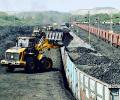
The output of eight key infrastructure sectors jumped by 12.1 per cent in October 2023 against 0.7 per cent expansion in the year-ago period on account of a sharp uptick in production of coal, steel, cement and electricity, according to the official data released on Thursday. These numbers assume significance as the eight core sectors -- coal, crude oil, natural gas, refinery products, fertiliser, steel, cement and electricity -- contribute 40.27 per cent to the Index of Industrial Production (IIP). Growth was primarily driven by a low base effect and double-digit growth in four sectors -- coal, steel, cement and electricity.

Eight core sector industries recorded a growth of 5.5 per cent in February, the highest in 11 months, mainly due to healthy expansion in output of coal, refinery products and electricity, according to a government data released on Tuesday. The eight core sector industries -- coal, crude oil, natural gas, refinery products, fertiliser, steel, cement and electricity -- had expanded by 2.2 per cent in February last year.
The Reserve Bank of India is expected to hold interest rate at 8 per cent in its fifth bi-monthly monetary policy review on Tuesday.
The growth of these core sectors -- coal, crude oil, natural gas, refinery products, fertiliser, steel, cement and electricity -- was 4.6 per cent in April 2023.
Reliance Industries' refining earnings will remain steady, supported by its position as India's largest importer of Russian crude and favourable global supplies, according to analysts at JM Financial and Goldman Sachs. Reliance imported more Russian barrels than any other Indian refiner in the past eight months, according to data from Bloomberg/Kpler.

Sluggish infrastructure sector growth would also have impact on IIP as these segments account for about 41 per cent of the total factory output.

The growth of eight key infrastructure sectors slowed to a 15-month low of 3.6 per cent in January, on account of poor performance of sectors like refinery products, fertiliser, steel and electricity, according to the official data released on Thursday. The growth of eight core sectors -- coal, crude oil, natural gas, refinery products, fertiliser, steel, cement and electricity -- was 4.9 per cent in December. It was 9.7 per cent in January 2023.

The growth of eight key infrastructure sectors slowed down to 4.3 per cent in May 2023 due to a decline in the production of crude oil, natural gas and electricity, according to the data released by the government on Friday. The core sector growth was 19.3 per cent in May 2022, while in April 2023, the key infra sectors recorded a growth rate of 4.3 per cent. During April-May this fiscal, the output growth of these eight sectors slowed down to 4.3 per cent against 14.3 per cent in the year-ago period, the data showed.

Poor performance of coal, petroleum refinery products and natural gas pulled down the core sector growth to 2.1 per cent in December, 2013 from 7.5 per cent in the same month a year ago.

The output of eight core sectors declined by 4.6 per cent in February, the steepest contraction in the last six months which experts said could drag the overall industrial production in the month into the negative territory. All the key segments, including coal, crude oil, natural gas, and refinery products, witnessed a decline in production, according to the official data released on Wednesday. The growth rate of the eight infrastructure sectors -- coal, crude oil, natural gas, refinery products, fertilisers, steel, cement and electricity -- stood at 6.4 per cent in February 2020. Last time in August 2020, the sectors had recorded a negative growth of 6.9 per cent.

Fuelled by the global capability centre (GCC) boom, gross leasing of office space across top eight cities soared 5 per cent to touch 21.4 million square feet (msf) in the second quarter of calendar year 2025, according to Cushman & Wakefield's Q2 India Office Market report.

'Mera plan hain aap logon ko itna daraungi, itna daraungi ki matlab bas band bajne wali hain.'
Growth rate of eight core sector industries declined to 1.8 per cent in November, from 7.8 per cent in the same month last year, due to drop in production of coal, natural gas and cement.

The eight sectors, which also include fertilisers, steel, natural gas, electricity and crude oil, had expanded by 1 per cent in June last year.

Cumulatively, the eight core sectors grew by 4.2 per cent in 2017-18, lowest in the last three financial years.
The eight key infrastructure sectors' growth rose by 6.3 per cent in May on healthy expansion in the production of coal, natural gas, and electricity, though the growth rate is lower than in April, according to official data released on Friday. The production of the eight sectors grew 6.7 per cent in April. The growth of these core sectors -- coal, crude oil, natural gas, refinery products, fertiliser, steel, cement and electricity -- was 5.2 per cent in May 2023.
Production at factories, mines and utilities likely rose an annual 2.4 per cent in August, up from July's 0.5 per cent rise, according to the survey of 26 economists.

The growth of eight key infrastructure sectors slowed to a 14-month low of 3.8 per cent in December 2023, on account of poor performance of sectors like crude oil, electricity, steel and cement, according to the official data released on Wednesday. The core sector (coal, crude oil, natural gas, refinery products, fertiliser, steel, cement and electricity) growth in November was 7.9 per cent. It was 8.3 per cent in December 2022.

In March 2021, Ola Electric founder Bhavish Aggarwal was seen surveying an empty 500-acre land surrounded by shoe factories, temples, bakery shops, coconut trees and dusty roads in Pochampalli town of Krishnagiri district, Tamil Nadu. Many excavators and workers were busy at the construction site to build the Ola Futurefactory for electric vehicles.

Department of Economic Affairs secretary Atanu Chakraborty said that equity capital flows have been positive this year.

The foreign degree no longer sells itself, families are doing the math, and for many, the numbers just don't add up.

The expansion in September is highest since April, when the core sectors' growth stood at 2.6 per cent.

The growth rate in September was highest since May when it was 4.4%.

Coal, refinery products, electricity and cement production registered a growth of 14.5 per cent, 8.1 per cent, 10.2 per cent and 11.3 per cent, respectively in November, as per the data released by the Commerce and Industry Ministry.

The growth in key sectors will have implications for the Index of Industrial Production as these eight segments account for about 41 per cent of the total factory output.
 © 2026 Rediff.com - Advertise with us - Disclaimer - Privacy Policy - Sitemap - Feedback - About us - Terms of use - Grievances